
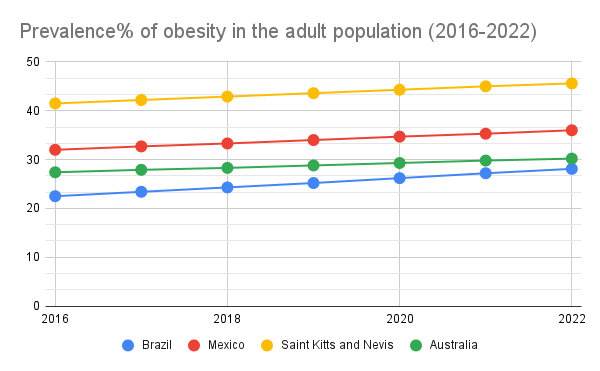
Figure 4
Source: FAOSTAT suite of food security indicators (obesity)
In 2022 obesity affected 890 million adults worldwide (WHO, 2025). With obesity rates increasing worldwide, nations and health organisations alike are racing to find ways to decrease the prevalence of obesity. In Australia, diet was the third leading risk factor contributing to poor health and premature death in 2018 (Australian Insitute of Health and Welfare, 2024). Diets low in whole foods and fresh produce, high in processed foods and heavy with sodium, sugar and preservatives have been identified as factors leading to chronic disease.
Figure 4 above, shows a steady increase in obesity in all four countries, the prevalence of obesity in Saint Kitts and Nevis is significant with nearly half of the population affected by obesity by 2022. Mexico, while reaching WHO recommendations for fruit and vegetable consumption, has obesity rates of 36%. To put this into perspective, lets broaden our focus more globally. Figure 5 demonstrates the steady increase in the rate of obesity and the disparity between the countries. While Samoa has over half of it’s population afflicted by obesity, Japan has seen an increase of only 2.9% from 2000 to 2022, with 5.5% of their population suffering from obesity.
Figure 5
Source: FAOSTAT
There is no denying that our diets are unhealthy. The main issue lies in the widespread consumption of processed food which provide very little nutrients. These food items are mass produced using cheap ingredients designed to prolong shelf life and increase profits. On a whole, processed foods require less human labour in comparison to fresh produce, which requires more time and is at the mercy of climate both in its production cycle and shelf life, thus effecting pricing and availability (Deakin University, n.d.). By continuing to collect data and analyse the reasons we are making certain food choices, despite, for the most part, knowing the components of a healthy diet, we may begin to reverse this harmful trend.
Factors such as: choosing convenience when time poor; cost and availability; and personal preferences, are some of the considerations Australians face when choosing what to eat. A recent study in the Lancet estimated that almost half of Australians’ diets are made up of ultra processed foods (Baker et al., 2025). Figure 6 shows the estimated cost of a healthy diet, per person, using the least expensive locally available foods to meet dietary guidelines. Australia shows the most affordability out of the four countries, however, a healthy diet in 2023 cost approximately AUD$600 a fortnight for a family of four; for low income earners that was approximately a third to a quarter of their income (ABC, 2023).
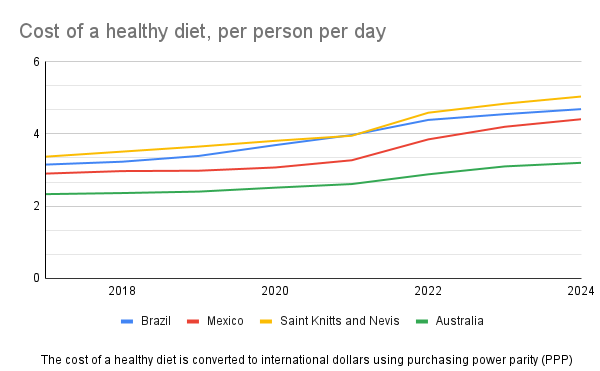
Figure 6
Source: FAOSTAT
Improving the Australian diet is going to take more than individual willpower, why are the occasional foods groups contributing to a quarter of our diet? When people are reaching for processed foods over fresh produce due to time and cost, it’s a clear sign that more focus needs to be paid to reverse this trend. It should not be a privilege to have a healthy and balanced diet and perhaps by learning from the polices of other countries and monitoring their impacts we can begin to cure the health of our diets.
What can we learn?
Australia’s guideline relies heavily on the serves of each food group we need a day. This is in contrast to Brazil’s focus on whole foods and the behavioural aspects of eating, such as not multi-tasking while eating, aiming to eat with company and being mindful of where the food has come from. Brazil’s approach has the potential to shift our habits away from rush and convenience to becoming more intentional with how we choose what we eat and how we eat it.
Mexico’s tax on sugary drinks has drastically reduced consumption and is estimated to have prevented 239, 900 cases of obesity. In 2020 Mexico implemented mandatory warning labels on food items with excessive amounts of calories, sugar, fats and sodium along with the advice of “contains sweeteners, not recommended for children” and “contains caffeine, avoid giving to children”.
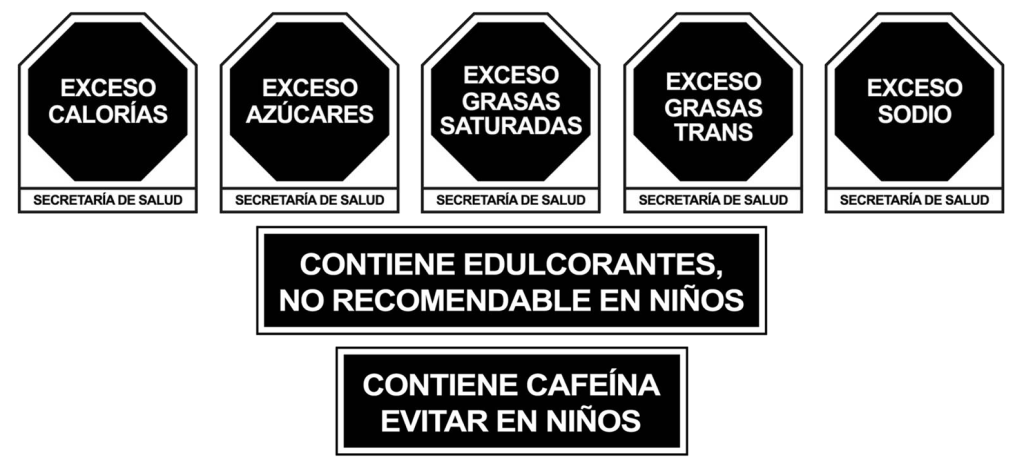
Figure 7
Source: Global Food Research Program
Australia can use these key takeaways to implement policies that target the prevalence of occasional foods in our diet and update our guidelines to make eating healthier easier to follow and implement for the general population.