Why is a healthy diet important?
What we choose to eat, and how much of it, effects they way our bodies function. A good diet equals good health, therefore a poor diet will lead to poor health. Consuming foods too high in salt, fat, sugar and unnecessary additives significantly increases the risk of chronic diseases; such as heart disease, diabetes, obesity and stroke (Rippin et al., 2023).
Most Australians are aware of the types of foods that contribute to a healthy diet and those that don’t. Food guidelines exists to promote healthy food choices and, although they differ from country to country, they are all based on the idea of a balanced diet that prioritises fruit and vegetables and limits fats, sugars and salts (Van Dyke et al., 2024). The Australian Dietary Guidelines of 2013, as the name suggests, has been developed to guide the choices in what Australians eat. Table 1 shows the recommended serves of the 5 major food groups of adults aged 19 – 50.
What is a healthy diet?
The Australian Dietry Guidelines
| Food Group | Recommended serves per day for Women (aged 19-50) | Recommended serves per day for Men (aged 19-50) |
|---|---|---|
| Vegetables and legumes | 5 | 6 |
| Fruit | 2 | 2 |
| Cereals and staples | 6 | 6 |
| Protein from lean meat, fish, poultry, eggs, nuts, seeds, legumes and beans | 2.5 | 3 |
| Dairy or dairy alternatives | 2.5 | 2.5 |
Table 1
Source: Australian Dietary Guidelines, 2013
In addition to this, the guidelines state to use small amounts of added fats and limit processed foods and beverages to occasional intake and in small servings.
The World Health Organisation (WHO) aims to provide guidelines to support good health and monitor health trends. WHO provides evidence based recommendations that are applicable worldwide, taking into account availability, food culture and economy (Saluja et al., 2022). Table 2 shows the WHO recommendations for individuals aged 10 and over based on a daily intake of 2,000 calories.
| Food Group | WHO Recommendation for daily intake |
|---|---|
| Carbohydrates from fruits, vegetables, whole grains and pulses | 45 – 75% 25 grams of fibre 400 grams, combined, of fruit and vegetables |
| Proteins | 10-15% |
| Fats | 15-30% Focus on unsaturated fats (fish, avocado, nuts and sunflower, canola, soybean and olive oil. Less than 10% from saturated fats (animal fats) Less than 1% from trans fats (found in processed foods as chemically altered fats used mainly to extend shelf life or stabilise the texture of a food item. |
| Salt | Less than 5 grams |
| Sugar | Less than 50 grams (12 teaspoons) of added sugar |
Table 2
Source: WHO, 2026
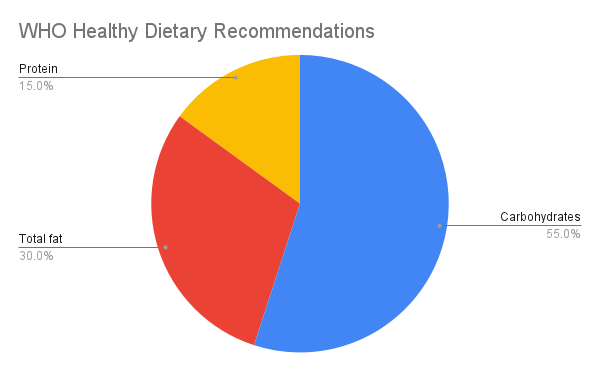
Figure 1
Source: WHO, 2026